01 KAKATIYA RULERS
Verra Edhava Gunda Bewars and Poramboku, Bayam tho vadi pellam Durga Paripoyindhi Rudridi gudilo dhakundhi, pujari
Mahadevudu Ganapathi ki puja chesi Rudrama devi ga Parivarthana chesadu
>[!caution ] VEGetarians Believe Plant Based Diets Promotes Reproduction of Muscles, Glowing Radiant Personality
>- V = Venna
>- E = Erra
>- G = Gundla I
>- Believ  = Beta raju I
>- Plant = Prola raju I
>- Based = Beta raju II
>- Diets = Durga Nirpati
>- Promotes = prola raju II
>- Reproduction = Rudradeva I
>- Muscles = Mahadeva
>- Glowing = Ganapati deva
>- Radiant  = Rudramba
>- Personality = Prataparudra
KAKATIYAS
- 10th century they were as the military generals of the Rastrakuta kings
- Later they appointed as Mahasamanthas cheif of the numakanda vishaya by the western chalukyas whom they served as legal subordinates.
- They declared independent at about 1000 AD on at warngal (orugallu). They later extended to whole of telangana and also andhra region and some parts of orrisa and Tamil Nadu.
- 323 year of reign, famous for best administration
- Ended their era in 1323 AD
- Divided into two parts
- 1000 -1157 AD
- 1158 - 1323 AD
- Divided into two parts
- Identity - Inscription of magalla by danarrana
- Bayyaram inscription 1250 ad by Mylamba
- Tells that they served as military chiefs for rashtrakutas.
- Prataparuda yashobhushanam - written by vidyanath explains the meaning of kakti is durgashakti as their family worshipped.
- Local god of orugallu kakati and ekaveera at temple of kakatamma located in orugallu fort. so they got eh name from it . Kreedabhiramam written by vallabhamatya narrated the above.
- Many inscriptions show they were worshippers of Swayam Bhudeva.
- The reign of kakatiya was described as the golden era of sudras.
- Kakatiya followed jainism earlier and later converted to saivism.
Establishment
- krishna - III (rashtrakutas) gave magallu village to please "Gundiya" and Issued "magallu" inscription in 956 AD
- Tailapa killed Gundana with the help of army cheif viriyala errana.
- Garuda Bethana was son of gundayana and was very young.
- Kamasani, wife of virriyala erranna, who was army cheif of kalyani chalukya, supported bethana, with the help of Jailapa he got hanumakonda(anumakonda) to rule.
- Bethana know as betaraju-I.
venna
?
VEGetarians Believe Plant Based Diets Promotes Reproduction of Muscles, Glowing Radiant Personality
- V = Venna
- E = Erra
- G = Gundla I
- Believ = Beta raju I
- Plant = Prola raju I
- Based = Beta raju II
- Diets = Durga Nirpati
- Promotes = prola raju II
- Reproduction = Rudradeva I
- Muscles = Mahadeva
- Glowing = Ganapati deva
- Radiant = Rudramba
- Personality = Prataparudra
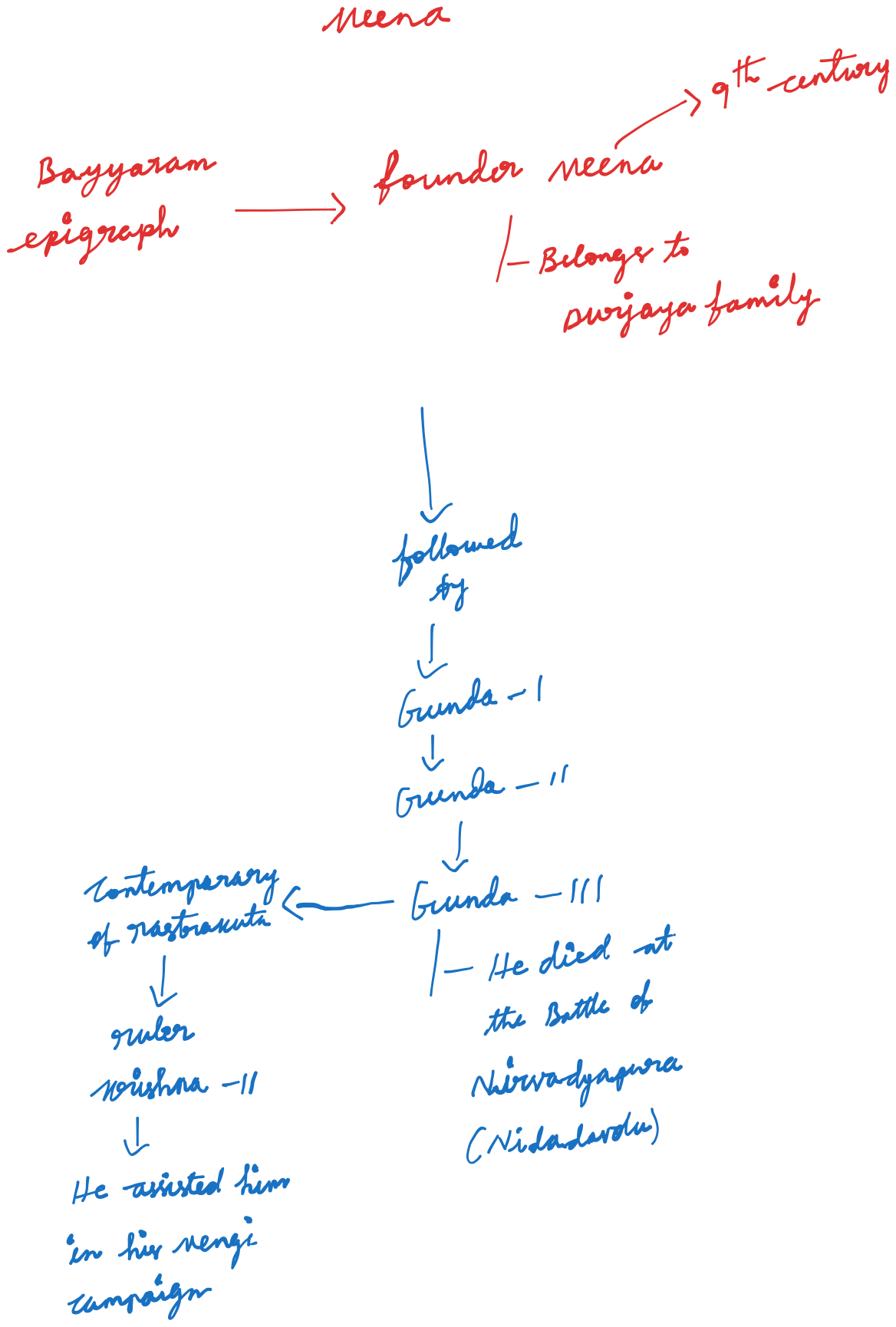
erra
?
VEGetarians Believe Plant Based Diets Promotes Reproduction of Muscles, Glowing Radiant Personality
- V = Venna
- E = Erra
- G = Gundla I
- Believ = Beta raju I
- Plant = Prola raju I
- Based = Beta raju II
- Diets = Durga Nirpati
- Promotes = prola raju II
- Reproduction = Rudradeva I
- Muscles = Mahadeva
- Glowing = Ganapati deva
- Radiant = Rudramba
- Personality = Prataparudra
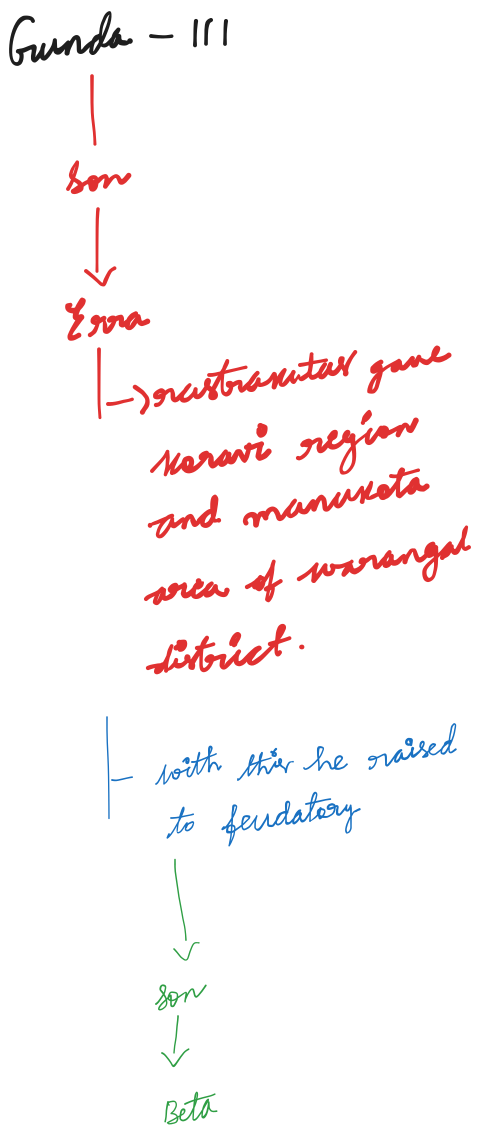
Gunda I
?
VEGetarians Believe Plant Based Diets Promotes Reproduction of Muscles, Glowing Radiant Personality
- V = Venna
- E = Erra
- G = Gundla I
- Believ = Beta raju I
- Plant = Prola raju I
- Based = Beta raju II
- Diets = Durga Nirpati
- Promotes = prola raju II
- Reproduction = Rudradeva I
- Muscles = Mahadeva
- Glowing = Ganapati deva
- Radiant = Rudramba
- Personality = Prataparudra
Beta raju-I (1000-1052AD)
?
VEGetarians Believe Plant Based Diets Promotes Reproduction of Muscles, Glowing Radiant Personality
- V = Venna
- E = Erra
- G = Gundla I
- Believ = Beta raju I
- Plant = Prola raju I
- Based = Beta raju II
- Diets = Durga Nirpati
- Promotes = prola raju II
- Reproduction = Rudradeva I
- Muscles = Mahadeva
- Glowing = Ganapati deva
- Radiant = Rudramba
- Personality = Prataparudra
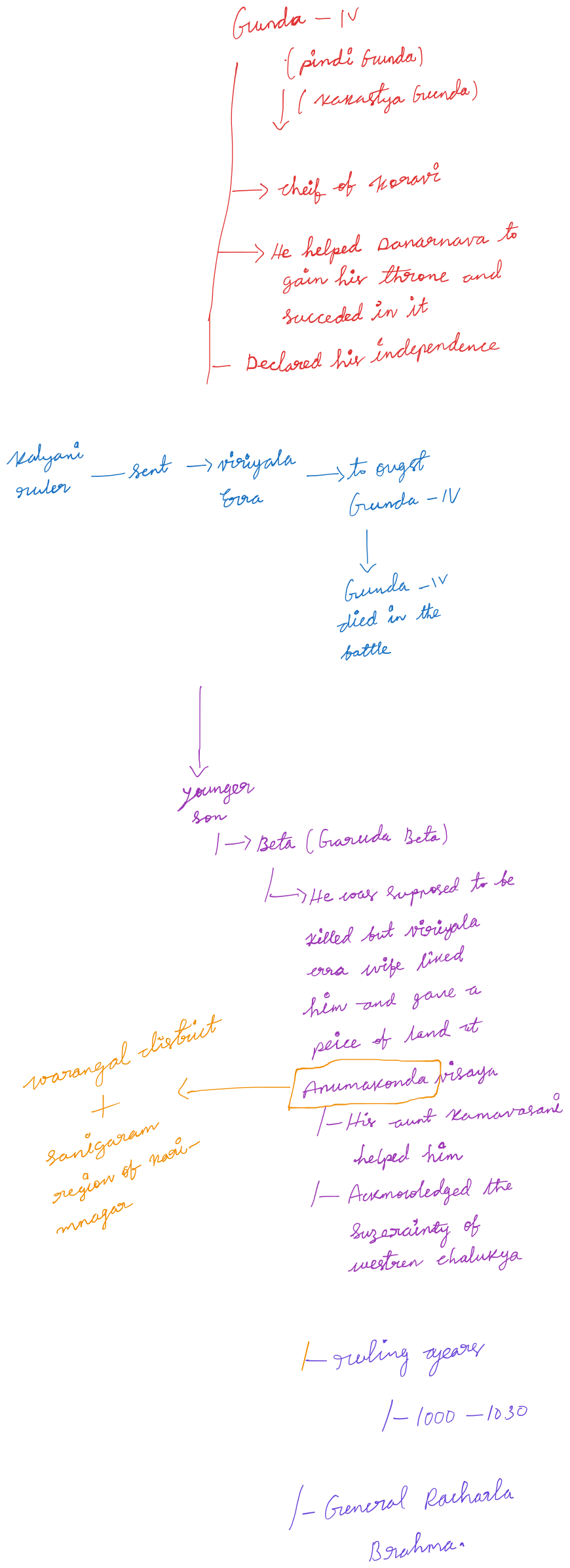
- gunda 1 excalidraw
- Ruled for 30 years.
- 🧠Sanigram inscription (1051 AD) shows he lived upto 1051 AD
- He attacked kanchi, chola kingdom on behalf of Trailokya someswara, chalukya king.
- Tittles
- 📢chola chamoovardhi pramadhana
- 📢 kakati puradhinatha
Prola raju -1(1052-1076AD)
?
VEGetarians Believe Plant Based Diets Promotes Reproduction of Muscles, Glowing Radiant Personality
- V = Venna
- E = Erra
- G = Gundla I
- Believ = Beta raju I
- Plant = Prola raju I
- Based = Beta raju II
- Diets = Durga Nirpati
- Promotes = prola raju II
- Reproduction = Rudradeva I
- Muscles = Mahadeva
- Glowing = Ganapati deva
- Radiant = Rudramba
- Personality = Prataparudra
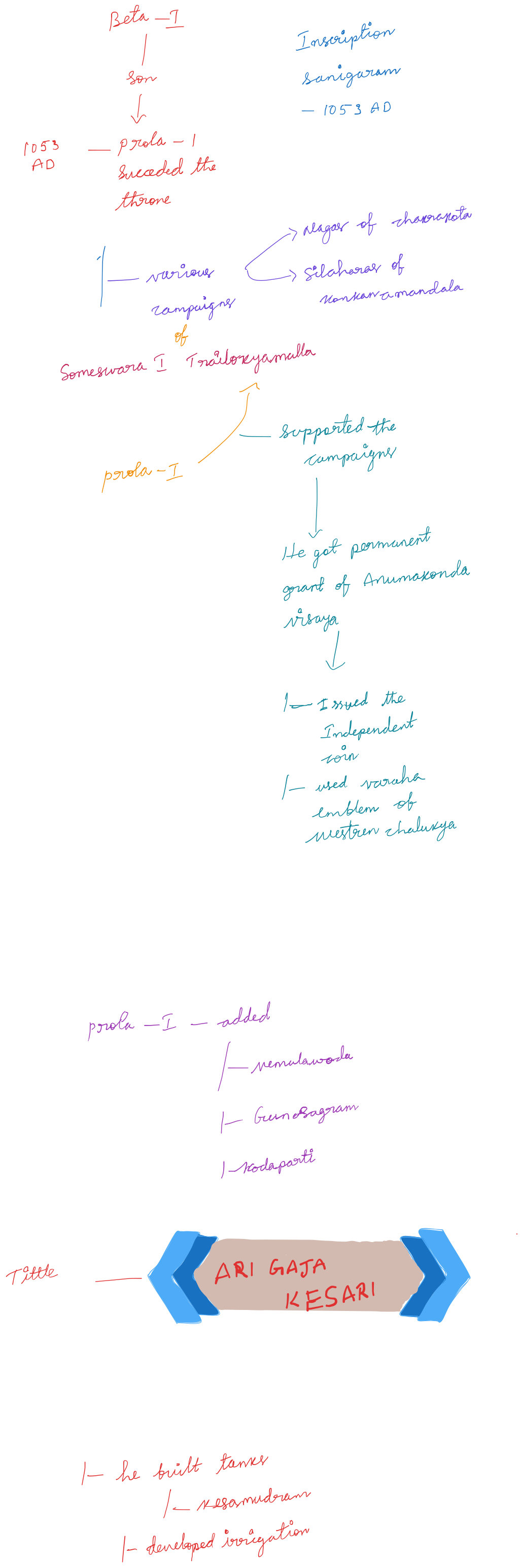
- prola I excalidraw
- Helped chalukya king " someswara" the western chalukya king against chakrakuta kings.
- Someswara gave anummakonda and allowed to produce his own coins and use symbol someswara (chalukya symbol) pig on their.
- Tittle
- Ari gaja kesari.
- samadhigatha pancha mahasadba
- Dug many tanks like "jagat kesari samudram"
Betaraju-II(1076-1108AD
?
VEGetarians Believe Plant Based Diets Promotes Reproduction of Muscles, Glowing Radiant Personality
- V = Venna
- E = Erra
- G = Gundla I
- Believ = Beta raju I
- Plant = Prola raju I
- Based = Beta raju II
- Diets = Durga Nirpati
- Promotes = prola raju II
- Reproduction = Rudradeva I
- Muscles = Mahadeva
- Glowing = Ganapati deva
- Radiant = Rudramba
- Personality = Prataparudra
- beta II excalidraw
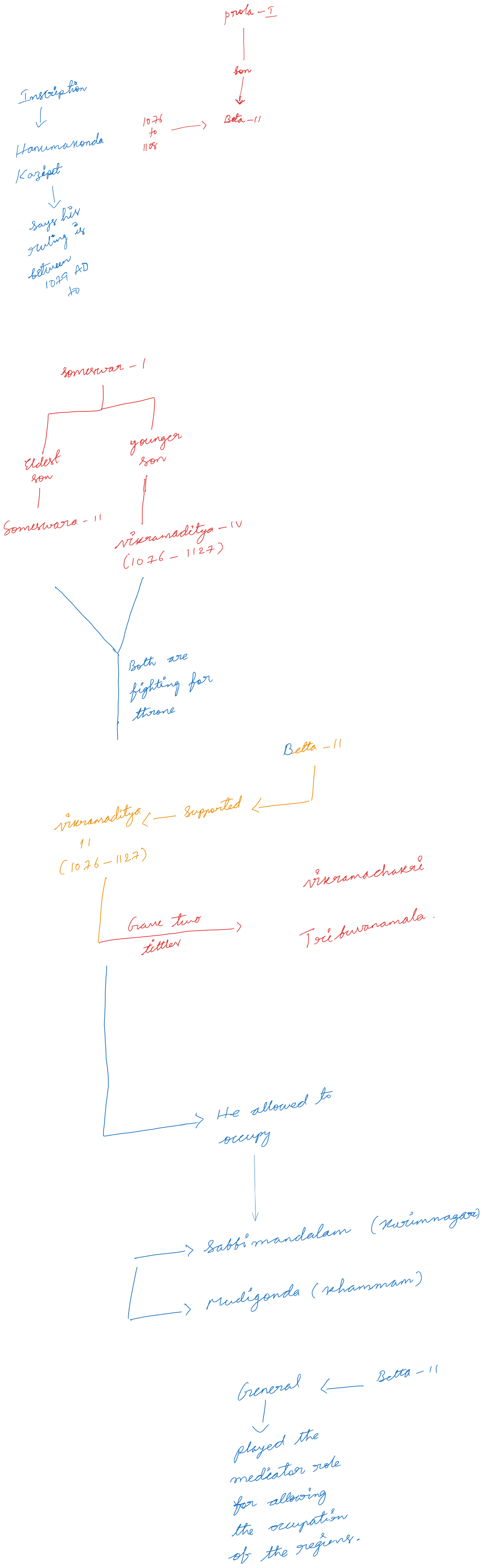
- Betarju II supported vikramaditya -iv, who came to rule had offered.
- Tittles like
- Vikrama chakri and
- Tribhuvanamall
- Permitted him to occupy the sabhi Mandala
- Identification - Khazipet inscription
- Patronised sivaism under the guru - rameswara pandit.
- He built saivapur at anumakonda as gift for guru for preachings.
- He built Betaswera temple.
Durga Nirpati(1108-116AD)
?
VEGetarians Believe Plant Based Diets Promotes Reproduction of Muscles, Glowing Radiant Personality
- V = Venna
- E = Erra
- G = Gundla I
- Believ = Beta raju I
- Plant = Prola raju I
- Based = Beta raju II
- Diets = Durga Nirpati
- Promotes = prola raju II
- Reproduction = Rudradeva I
- Muscles = Mahadeva
- Glowing = Ganapati deva
- Radiant = Rudramba
- Personality = Prataparudra
- Durga excalidraw
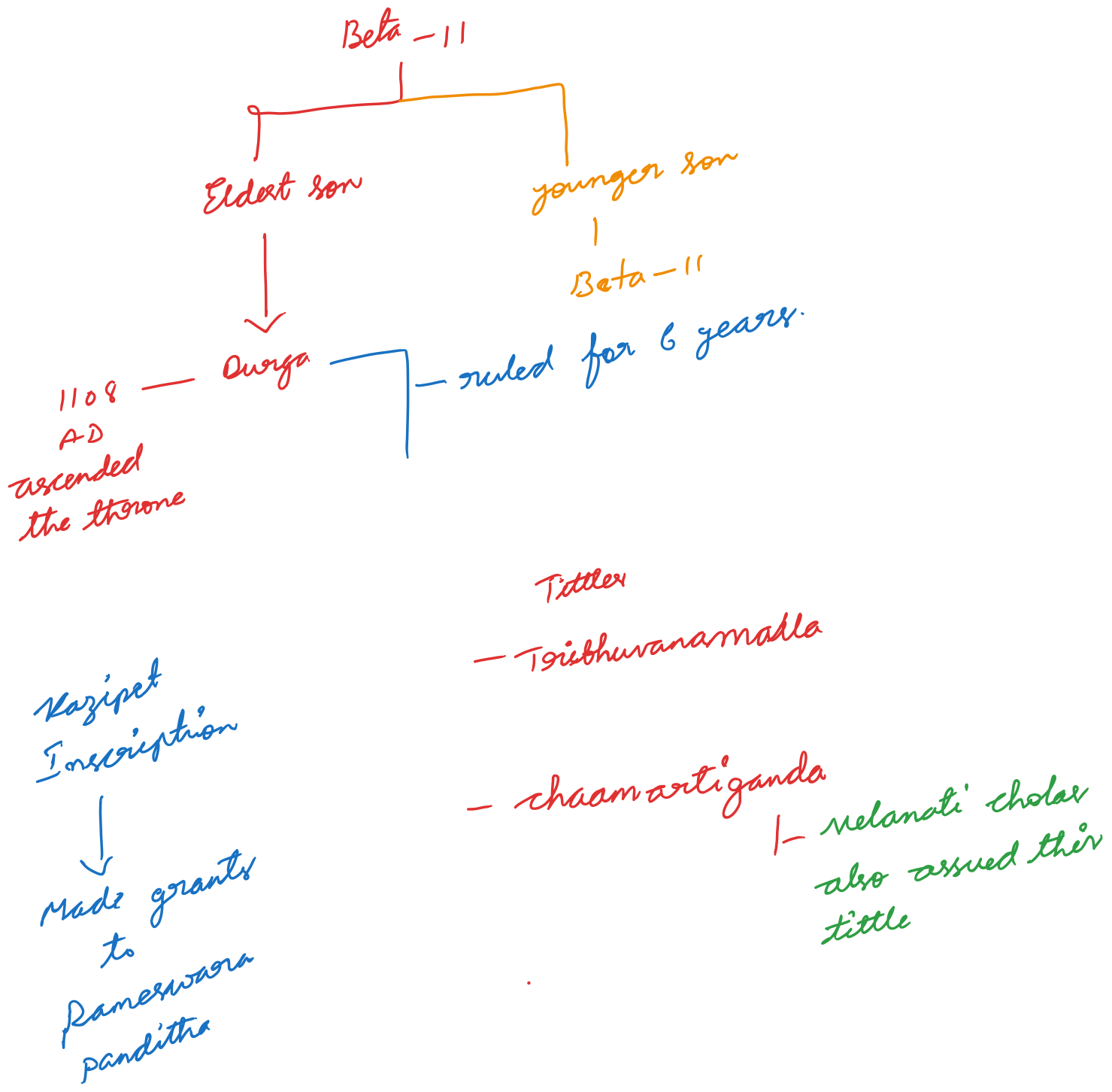
- Eldest son of Betaraju-II
- 8years
- Tittles
- Tribhuvanamalla
- Chalamaratiganda
- Religious teachers - Ramaswara Dikshit
Polaraju-II(1116-1157AD)
?
VEGetarians Believe Plant Based Diets Promotes Reproduction of Muscles, Glowing Radiant Personality
- V = Venna
- E = Erra
- G = Gundla I
- Believ = Beta raju I
- Plant = Prola raju I
- Based = Beta raju II
- Diets = Durga Nirpati
- Promotes = prola raju II
- Reproduction = Rudradeva I
- Muscles = Mahadeva
- Glowing = Ganapati deva
- Radiant = Rudramba
- Personality = Prataparudra
- Prola II excalidraw
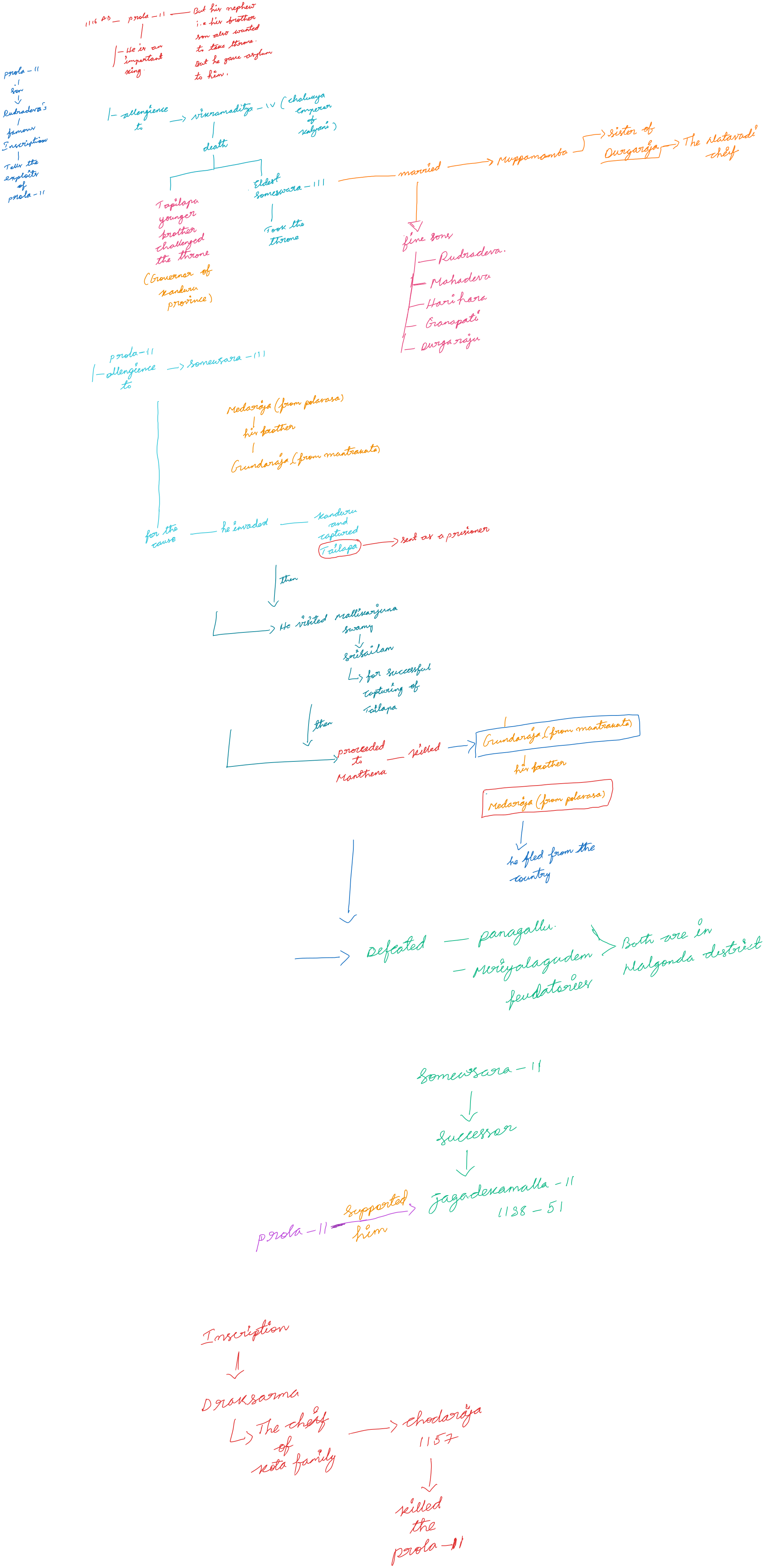
- Death of his younger brother Durganripati came to rule in 1116 AD
- Inscription his son Rudradeva Hanumakonda inscription
- Ganapavaram inscription issued by ganapamba
- Draksharama inscription reveals the prolaraju died in hands of Badharaju.
Rudra veda(Pratapa Rudra-I) (1158-95AD)
?
VEGetarians Believe Plant Based Diets Promotes Reproduction of Muscles, Glowing Radiant Personality
- V = Venna
- E = Erra
- G = Gundla I
- Believ = Beta raju I
- Plant = Prola raju I
- Based = Beta raju II
- Diets = Durga Nirpati
- Promotes = prola raju II
- Reproduction = Rudradeva I
- Muscles = Mahadeva
- Glowing = Ganapati deva
- Radiant = Rudramba
- Personality = Prataparudra
- Rudradeva I excalidraw
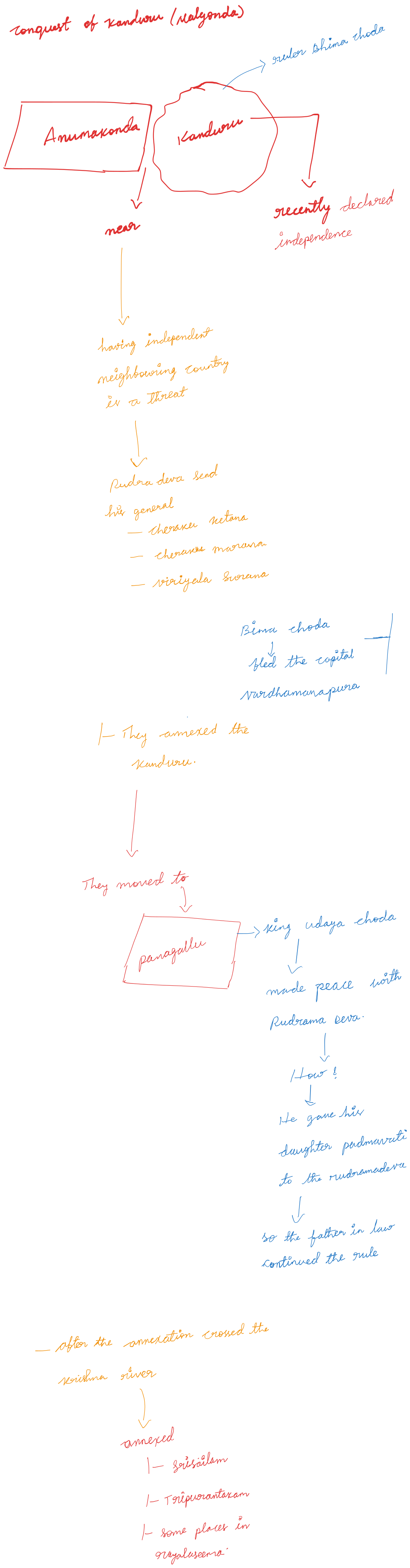
- rudra deva I conquest kanduru excalidraw
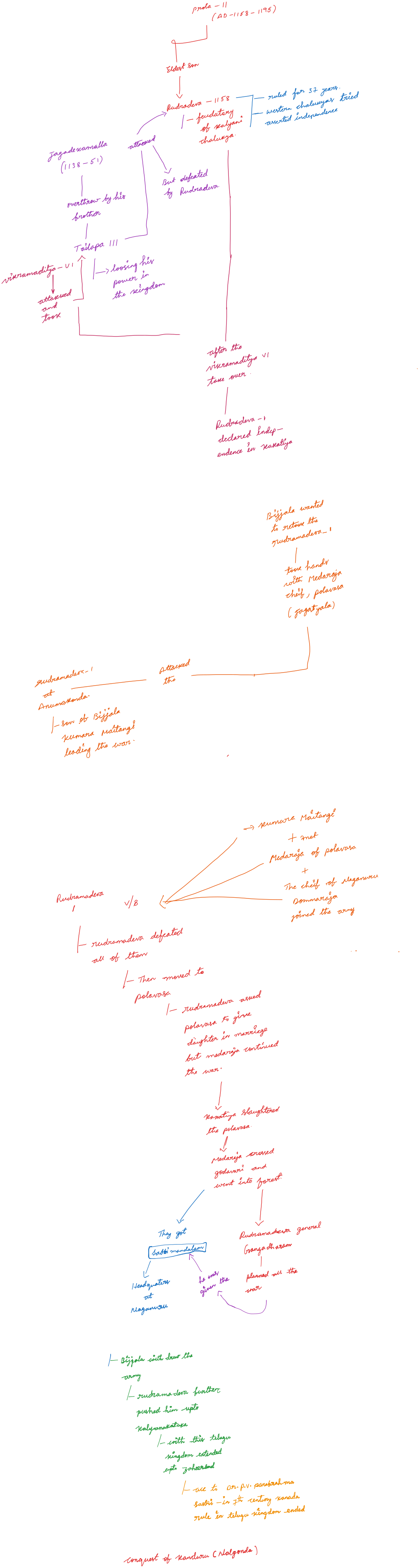
- Eldest son of Prolaraju.
- Inscription
- Uppara palli - Ganapatideva
- Malkapur - Rudramadevi
- Gangadhara minister helped him in many battles so he gave sabi mandala to rule.
- 1st time origin of telugu languages, the first independent andhra kingdom emerged.
- Built a tank named "Rudra Tataka" in panagallu.
- Draksharama inscription of 1186 AD reveals that the pithapura chalukya maintained friendly relation with kakatiyas.
- Build Rudreswara temple (thousand pillar temples) in Hanumakonda with ideals of lord Rudreswara, vasudeva and suryadeva.
- He was a scholar and poet.
- He wrote books called "Neetisara" in sanskrit.
- Transferred capital from anumakonda to orugallu.
- Patronised great poets like "Palkurki Somanatha".
Mahadeva(1195-1198AD)
?
VEGetarians Believe Plant Based Diets Promotes Reproduction of Muscles, Glowing Radiant Personality
- V = Venna
- E = Erra
- G = Gundla I
- Believ = Beta raju I
- Plant = Prola raju I
- Based = Beta raju II
- Diets = Durga Nirpati
- Promotes = prola raju II
- Reproduction = Rudradeva I
- Muscles = Mahadeva
- Glowing = Ganapati deva
- Radiant = Rudramba
- Personality = Prataparudra
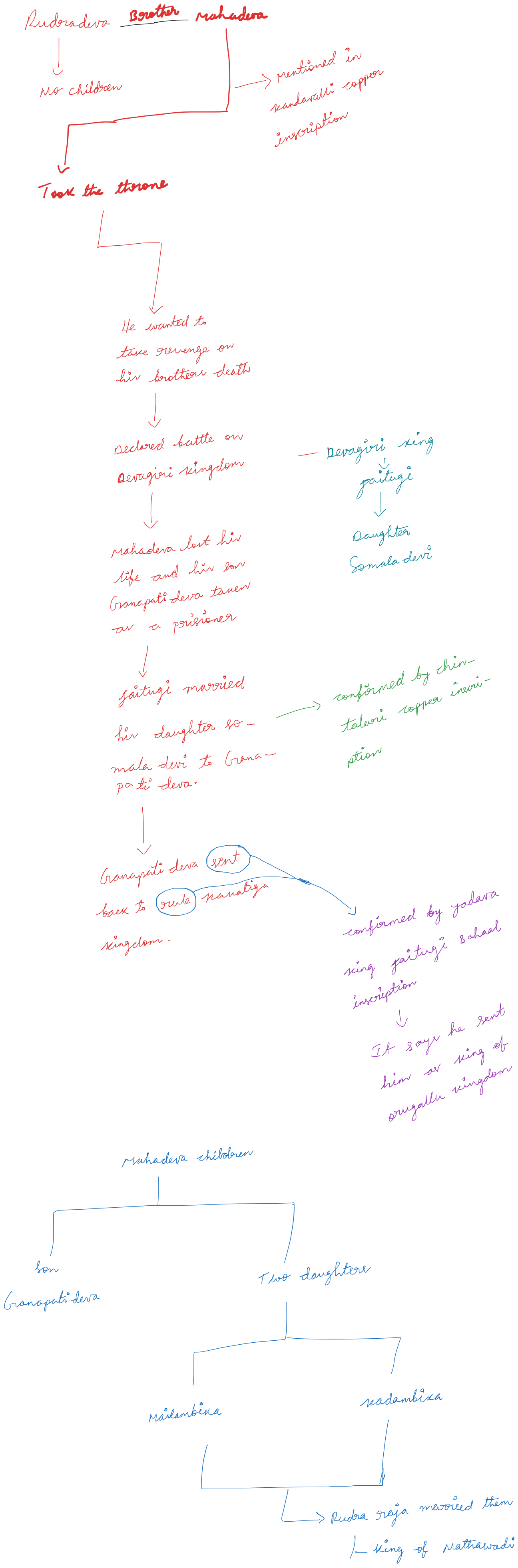
- mahadeva excalidraw
- Younger brother of Rudra deva.
- Inscription Details
- Pakala
- Ekatrakantha
- Kandavaram
- Malkapuram
- Invaded Devagiri capital of Yadava.
- Son
- Ganapathideva and two daughters
- Mylamba and kudambika.
Ganapathideva(1119-1262AD)
?
VEGetarians Believe Plant Based Diets Promotes Reproduction of Muscles, Glowing Radiant Personality
- V = Venna
- E = Erra
- G = Gundla I
- Believ = Beta raju I
- Plant = Prola raju I
- Based = Beta raju II
- Diets = Durga Nirpati
- Promotes = prola raju II
- Reproduction = Rudradeva I
- Muscles = Mahadeva
- Glowing = Ganapati deva
- Radiant = Rudramba
- Personality = Prataparudra

- ganapati deva excalidraw
- prisioners for some time and later released.
- During that time Recharla Rudra - maintained the administration
- After Shatavahanas, Ganapathi deva was only the ruler who brought all andhra into single dynasty
- control in history of telugu regions.
- Built "Ramapa temple" at palampeta.
- Tikkana court poet of manumasidhi.
- Developed matupalli port completed swayambu temple.
- Battle with pandya dynasty(1263AD)
- completed construction of Orugallu fort.
- Tittles
- Pridhviswara, siraha kunduka kreedavinoda
- Raya gaja kesari
- two daughters
- Rudrama - married to chalukya veerabhadra
- Ganapamba - married to kota bettaraju.
- two daughters
Rudramadevi(1262-1289AD)
?
VEGetarians Believe Plant Based Diets Promotes Reproduction of Muscles, Glowing Radiant Personality
- V = Venna
- E = Erra
- G = Gundla I
- Believ = Beta raju I
- Plant = Prola raju I
- Based = Beta raju II
- Diets = Durga Nirpati
- Promotes = prola raju II
- Reproduction = Rudradeva I
- Muscles = Mahadeva
- Glowing = Ganapati deva
- Radiant = Rudramba
- Personality = Prataparudra

- rudramba excalidraw
- Ascended the throne as "Rudra Maharaju"
- Army chefs of Rudrama pottapinayaka and proyala nayaka defeated veerabbany and took the tittle - Gajapathi mathamatanga simha" and "Oddeyaraya mana mardhana".
- Helped Rudrama to settle down
- Gona Gannareddy
- Prasaditya nayaka
- Rudrama Nayaka
- Kayastha leaders
- Tanniya Deva
- Tripurantaka
- Brahmana soilders.
- Bendamudi annaya
- Mahadeva, yadhava attended Rudramana, with the help of gonna gannareddy Rudrama defeated mahadeva and issued inscriptions "Bidar" fort inscription"
- peace pack - 3 crore suvarnas
- Her tittle - Raya Raja kesari
- Died in the battle with Ambadeva, according to tripurantaka inscription.
- Praised as warrior woman.
- Three daughters
- Mummadamma - married to prime mahadeva their son pratapadura - II came to rule after rudramadevi.
- Rudramma
- Ruyyamma.
PratapaRudar-II(1289-1323AD)
?
VEGetarians Believe Plant Based Diets Promotes Reproduction of Muscles, Glowing Radiant Personality
- V = Venna
- E = Erra
- G = Gundla I
- Believ = Beta raju I
- Plant = Prola raju I
- Based = Beta raju II
- Diets = Durga Nirpati
- Promotes = prola raju II
- Reproduction = Rudradeva I
- Muscles = Mahadeva
- Glowing = Ganapati deva
- Radiant = Rudramba
- Personality = Prataparudra

- pratapa rudra excalidraw
- Attacked and defeated Ambadeva and attacked the yadhava who attacked and helped amabadeva. According to vardhamanapura inscriptions.
- Nayankara system - appointed of different caste people to rule different regions by Rudramadevi. But prataparudra changed and appointed only those belongs to Padmanayaka caste.
- Battles with muslims
- Allah uddin khilji - defeated by kakatiya at upparapalli
- Allah uddin send a huge army under the leadership of Malik kapur and they fought for two months and made peace pact with uddin.
- Death of allah uddin khilji and malik kapor prataparudra stopped paying tributes.
- 1318 AD - Qutubuddin mubaraq ascended the throne and send army under the cheif of qhusrukhan to collect tributes, then prataparudra started paying tributes.
- 1320 AD - tuglaq dynasty came to rule in delhi replacing khiljis. Ghiasuddin tuglaq, founder of their dynasty had became the ruler of delhi. Prataparudra stopped paying tribute again.
- In 1321 AD Delhi sultanate sent huge army under the prime zuna khan, tittle Ulugh Khan.
- He was defeated by kakatiya armies.
- After 4 months again he went for to fought against kakatiya this time he succeded and he took him prisioner Prataparudra to delhi, while in the journey he jumped into the river Narmada and committed sucide.
- With this kakatiya empire came to end.
start from page 6 or
political adminstration
- Monarch followed decentralisation
- sakalaeethisaram :: madiki singana
- Neetisastram Muktavali :: baddena
- Purusharthasaram :: sivadevayya
- Neeti saram by prataparudra
- No caste system in appointment
- Maha pradhani, pradhani, preggada, amatya
- They were rajyam, mandalam, nadu, sthalam, seema bhumi and others.
- In each sthalam there were to be between 10 to 60 villages.
Village Administration
- Group of sthalam were called as Nadu
- Replaced the Gramasabha with ayyangars.
- Ayyangars were those who earned their land without for serving the village and kingdom.
- Ayam means the area of land.
- No of ayyagars in village was 12.
- Government employees
- Karanam - government employees
- Reddy - collection of revenue
- Talari - Butcher
- Purohit - priest
- Kammari - potter
- Kamsaali - Blacksmith
- Vadrangi - carpenter
- Kummari - potter
- Chakkali - washerman
- Mangeli - barbar
- Vetti - bonded labour
- charmakar - cobbler
- Government employees
Military system
- Two kinds
- Army of king/emperor
- Army of Nayankar
- law and order and served in battles when necessary.
- Cheif
- Mahadandanayaka
- Dandanayaka
- Maha Senani
- Senani
- Maha Senani
- Dandanayaka
- Mahadandanayaka
- 4 types of forces
- No chariots
- Described that, in the army of "prataparuda charitra".
- prataparudra
- 100 elephants
- 20000 horses
- and a lakh foot soldiers.
- They used to lead armies by themselves so they died in battles.
- King was protected by bodyguards and subordinates where were protected by lenakas.
Social system
- Based on caste system
- There were caste societies (kula sangalu) - called samayas.
- Brahmin - mahajan society.
- vaisyas - vaisya nakera
- Saivism/ vaishnavaism into formed to reform the Hindu Religion.
- Inter caste marriages
- Sudra developed
- Brahmins reduced their position.
- soilders from all castes.
- Chapakollu -festival traditions (all caste eating together)
Agriculture
- Betaraju -II - seti (kera)
- kesari (samudra)
- Ganapathideva
- Many ponds in warangal
- ramppa tank in warangal.
- Ghanapur
- Danabandha - Maintenance of water resources.
- Revenue - 4kg of paddy
- a piece of land.
Tax System
- Land divided into 4 types
- 3 where
- Wetland
- Medium Land
- Arcade land
- 3 where
- Taxes where imposed only after surveying the land.
- Sunkari
- Tirpari
- Collection of taxes.
- Paddy tax - Putta koluchu.
- Cash tax - Putti pachudi
- Panagallu inscription - 1122 AD reveals information about them.
- Motupalli inscription informs about import and export taxes.
- Nadendal and Durgi inscription of ganapathideva reveals the rate of taxes.
- Madiga tax
- Puttuperu tax,
- Gandi tax
- Marriage tax
- Pullavi tax on grass lands
- Tax burden was heavy
- Religion
- pasupata saivism
- kalamukta saivism
- kapalika saivism
- Srisailam were famous for all the three
- nellore for kapalika saivism.
- Ganapathi patronised the kapalika saivism. His teacher(guru) visweswara sambhu founded golaki mathas and propagated saivism. These were served as educational centres.
- verasaivism - Basaveswara patronised Andradeva kakatiya.
- Gurus - janagams - religion texts (agams) - followers lingayaths.
administration
Nayankara Syatem
?
- When Rudramba ascended the throne in A.D. 1262, the Kakatiya empire had become unwiedly to be governed effectively from Warangal.
- Rudramba therefore introduced what was known as Nayankara syatem.
- Under this system the feudatories and the local chiefs who were loyal to the emperor were allowed to govern their territories without undue interference from the centre.
- The Nayakas were drawn from the different castes like the Velamas, Reddis, Kammas, etc. In Telangana the Nayakas hailed from the well known families like Cherekuru, Malyala, Viriyala, Komaravelli, Recharla etc.
- In coastal region the members Muppidimacha, Devini families were chosen as Nayakas.
- In Rayalaseema, the Kayastas like Tripurari and Amba Deva were the leading Nayakas.
- However, after the death of Rudramba following the revolt of the Kayasta Amba Deva, and important change was made in the system by Prataparudra.
- Hence forth only Velamas belonging to the Padmanayaka section were chosen as Nayakas.
Territorial Divisions: Nadu
?
- The empire, for the purpose of administrative convenience, was divided into territorial units called Nadus.
- The important Nadus were Anumakonda Nadu, Sabbi Nadu, Kamma Nadu, Palli Nadu, Vegi Nadu, Vela Nadu, Visuru Nadu, Paka Nadu, etc.
Sthalams
?
- Nadus were sub-divided into a number of Sthalams.
- Each sthalam consisted of 20, 18 or 16 villages.
- The important officials of sthalam were Sthala Karanam, Stala Tirpari and Sthala Sunkari.
- Karanam was the accountat.
- Tirpari decided the amount of tax to be paid to the government.
- Actual collection of taxes was the duty of sunkari.
- Land tax was levied according to the fertility of the soil.
Irrigation
?
- The main source of the revenue was land-tax.
- Hence the Kakatiya rulers gave utmost importance to irrigation.
- They made it a point that each village had at least one tank.
- Huge tanks were constructed at different places like Pakala, Ramappa, Bayyaram, Kesamudram, Kundavaram, Bhanapuram, Lakhnavaram, etc.
- These tanks are in existence even today. Besides tanks, canals and wells were also constructed.
- As a result Kakatiya empire became self-sufficent in foodgrains.
Trade and commerce
?
- After land tax, the main source of revenue was commercial taxes.
- Taxes were levied on goods sold at village fairs conducted on a certain day in the week.
- The amount of tax was decided by the local association known as Samayam. They played important role in village administration.
- The Kakatiya rulers encouraged trade and commerce.
- To foster trade commercial complexes known as Penta were built near big villages where big weekly fairs were held
- In course of time the Pentas came to be known as Peta or commercial street.
- Godowns and shops were built by the government and given to merchants on hire.
- To foster trade, roads were constructed and goods were moved on the highways by bullocks, horses and donkeys.
Maritime Trade
?
- Kakatiya rulers encouraged maritime trade.
- Merchants from China, Myanmar (Burma), Sri Lanka, Indonesia, Rome and other cities of Italy visited the famous Kaktiya ports like, Motupalli, Machilipatnam, Krishnapatnam to purchase the famous Andhra textiles, diamonds, spices, carpets, etc. In exchange they sold, horses, silk, glass, etc.
- Tax known as Revu sunkam was levied on the imports and exports.
Motupalli Abhaya Sasanam
?
- Ganapatideva issued a proclamation at Motupalli, known as Abhaya Sasanam, guaranteeing the foreign merchants that they will not be harassed by the local officals.
The Testimony of Macro Polo
?
- The Venetian traveler Marco Polo visited Motupalli about A.D.1293 and recorded his impressions about the wealth of the kingdom and the efficiency of its administration.
Coinage
?
- The Kakatiya issued coins in metals like, gold, silver, copper and lead.
Gadyanam or Mada
?
- The gold coins were known as Gadyanam or Mada.
- The silver coins were known as Rukalu.
- Ten Rukalu were equivalent to one Mada.
- Copper and lead was used for small coinage like Podduga Paduka and Visam which were respectively half, one-fourth and one-tenth of Ruka.
- Each coin carried the legend Rajagajakesari or Rajyagajakesari and the Varaha emblem.
The contribution of the Kakatiyas to Andhra Culture and Civilisation
?
- The contribution of the Kaktiyas to Andhra culture and civilization is immense.
- During their rule of over three hundread years they shaped and influenced Andhra history and culture by defending the Deccan from the repeated invasions of the Muslims.
Literature
?
- During the time of the Kakatiyas, the telugu language and its literature began to develop.
- The earliest work in Telugu is Nannaya's Andhra Mahabharatamu.
- The work was undertaken during the reign of the Eastern Chalukyan king Rajaraja Narendra (1019-61).
- Nannaya could not complete the work. Tikkana, the court poet of Manumasiddi II of Nellore, completed the translation of the fifteen cantos (Parvas) of Mahabharata into Telugu at Warangal.
- He went there to persuade Ganapatideva to help his patron Manumasiddi who had been driven out of his Kingdom by his kinsmen.
- The other work of Tikkana was Nirachanottara Ramayanana.
- The popular work 'Bhaskara Ramayanamu' which is attributed to Mantri Bhaskara belonged to this period.
- Gona Buddha Reddi, a feudatory of Rudradeva, was the first to translate the Ramayana into Telugu by about A.D. 1250.
- The work is known as Ranganatha Ramayana.
- Marana, a disciple of Tikkana wrote Markendeya Puranamu.
- The immensely popular works Sumati Satakam is attributed to Baddena, a Telugu Choda King of the Kakatiya period.
- His other work is Niti Sastra Muktavali. Palkurki Somanatha was the author of the two Saivite works Panditaradhya Charitra and Basava Puranam.
- The other important Telugu works belonging to the Kakatiya period include Nannechoda's Kumara Sambhavam, Ketanas Dasakumara Charitra, Manchana's Keyurabahu Charita.
Sanskrit Works.
?
- The Kakatiya rulers extended patronage to Sanskrit also.
- Satkalyamalla wrote 'Udatta Raghava Kavyam' and 'Niroshtya Ramayana' in Sankrit.
- Jayapa Senani was the author of Nritya Ratnavali, Gita Ratnavali and Vadya Ratnavali.
- Rudradeva, the first of the Imperial Kakatiyas, was the author of the Sanskrit work called Nitisara.
- Yayati Charitramu, a sanskrit drama, is attributed to Prataparudra.
Art:
?
- The Kakatiyas were great builders of temples.
- Among the famous temples built by them were the Rudreswara temple of Anumakonda and Svayambhunatha temple in the fort of Warangal.
- The Ramappa temple and the Pillalamarri temple are the greatest works of art.
- The four majestic gateways in the fort of Warangal testify to the genius of the Andhra artists of Warangal.
- The Kakatiya capital Warangal was known as the Andhra Mahanagara.
- No other city in Andhra had such a distinction.
Irrigation works
?
- The Kakatiya period witnessed great development in agriculture.
- This was made possible as the Kakatiya rulers bestowed great attention in building numerous irrigation works, like lakes, taks, wells, etc.
- Among the famous irrigational works constructed by them were the Ramappa and Parkhal lakes.
- Prataparudradeva ordered reclamation of vast jungle tracts in Rayalaseema, especially in Kurnool district.
Religion:
?
- During those times, there were conflicts between Veera Shaiva and Veera Vaishnava sects.
- Great poet Tikkanna has tried to bring harmony between people saying that Hari, Hara are one.
- The people during that period worshipped Ekaveera, Renuka, Bhairava, Chamundeshwari, Veera, Bhadra, Mailara deva, Kumara Swamy, Muddarulu, Musanamma.
Jainism:
?
- Hanumakonda was famous Jain centre by A.D 800.
- Initial Kakatiya kings followed Digambara Jainism.
- According to Orugallu Kaitfiat, Jains who were tortured at Vengi came to Orugallu.
- Orugallu Kaifiat explains that unable to bear the violence of Vengi Chalukya King
- Raja Raja Narendra, Jain guru Rishabanath came to Orugallu.
- The Padmakshi temple of Hanumakonda was a Jain temple.
Famous Jain Pilgrim centers:
- Bodhan
- Potla Cheruvu (Patancheruvu)
- Vemulawada
- Kollipaka (Kolanupaka)
- Hanumakonda
- Vardhamanapuram
- Alampuram
- Potlapalli
- The Hanumakonda inscription of Prola starts with Jinedra prayer.
- Wife of Prola Raju Minister Betana, Mailamma has built a jain rest room named Kadalaya Basadi at Hanumakonda.
- Jainism could not attract and convince the people.
- People were attracted to Shaivism and Vaishnavism.
- Mallikarjuna Panditaradhya, Kalamukha Shaivas, Veerashaivas were behind the fail of Jainism.
- According to Mallikarjuna's Panditaradhya, Veerashaivas played a key role in the eradication of Jainism.
- A Veerashaiva, Brahmaiah has brought down the jain basadis.
- He brough down 100 jain basadis in Potla cheruvu and converted 2000 Jains to Shaivism.
- Panditaradhya says that Devara Dasaiah has brought down 5 jain basadis in potlacheruvu.
- Siddeshwara Charitra says that Ganapatideva, with the encouragement from Vishweswara Shiva has tortured Jain people in Hanumakonda.
- Vishweswara shiva has destroyed 36 jain villages. Gradually, jain temples were converted into Shiva temples.
- Even then Jainism could not collapse completely.
- Jains were there at Orugallu, During Pratapa Rudra's time, Appaarya has written a scripture Jinendra Kalyana Abhyudayam.
Shaivism:
?
- During Kakatiyas, period Shaivism has honoured by the Kings and the common people.
- According to Tripuranthakam, Malkapuram inscripions, during Ganapati Deva and Rudrama devi's regime, Kalamukha, Pashupata, Shivashasana, Kapalika, Yamila, Siddi sects were there in Shaivism.
- Kalamukha Shaivam was popular during 10th century.
- During the regime of Ganapati Deva, Golaki mutt was very popular.
- The head priest of Golaki mutt Vishweswara Shambu Ganapati Deva was the Shiva Deeksha guru of Ganapati Deva.
Golaki Mutts:
?
- Draksharamam
- Tripurantakam
- Mandadam
- Srisailam
- Pushpagiri
- Vishweswara Shambu was also Shiva deeksha guru to Rudramadevi and Pratapa Rudra.
- Malkapuram inscription says that in AD 1261, Rudrama Devi has donated Mandaram village (Mandadam) along with Velagapudi, Krishna Lanks to Vishweswara Shambu Guru.
- He named the village as Vishweswara Golaki or Vishwanadha Golagiri.
- Vishweswara Shambu has built a Shiva temple in the village. He established a Veda Patashal associated to this temple.
- He appointe Shaiva Brahmins there. There was a maternity hospital in that Village mutt.
- He built a Mutt a Kaleswaram and donated Ponna village for its maintenance.
- He built Shodasa Avara Kaala mutt at Yeleswaram.
- For the maintenance of that mutt, Ganapati Deva has donated Devudu Kandra kota.
- Vishweswara Shambu has established Vishweswara Shambulingams.
- Shiva Purana and Kurma puran explains about the 28 Yog charya incarnations of Lord Shiva.
- Shwetacharya was the first Yoga Charya and Lakuleesha was the last.
- Each Yoga Charya had 4 disciples. WIth their effort, Shaivism has spread in India.
- Aradhya Shaiva was one of the branch of Andhra Shaiva. There were 12 Shaiva Charya (Dwadashi Acharyulu)
Aradhya Shaiva Gurus:
?
- Siddatrayam Ravana, Marula, Ekorama
- Aradhyatrayam : Udbhatacharya, Vemanaradhya, Vishwaradhya
- Acharyatrayam Sri kantacharya, Haradattacharya, Bhaskaracharya
- Panditatrayam Sripati pandita, Mallikarjuna pandita, Manchana pandita
- The life history of Mallikarjuna one of Panditatrayam has written by Palkurki Somanatha in dwipada.
- Brahmins e who followed the teachings of this Acharyas were called as Aradhyas or Lingadharulu..
Veerashaivam:
?
- Basaveshwara has established veerashaivam in Karnataka.
- He opposed caste system. He questioned the dominance of Brahmis. He opposed child marriages and supported widow marriages.
- The displaces of Basaveshwara were called as Veerashaivas or Lingayats.
- They opposed fasting system. Black smiths, Weavers, cobblers have joined in Veerashaivam.
- Jangamas are the gurus of Veerashaivas.
- the scriptures of Veerashiava are called as Agamas.
Vaishnavism:
?
- Vaishnavism was also popular.
- The emblem of the Kakatiyas was Varaaham.
- Vaaraha symbol can be seen on their official papers and coins. They installed Vishnu idol in Trikuta temples.
- From the southern side, Vaishnavism entered into Andhra.
- In Telangana, the non-Brahmin followers of Ramanjua were called as Dasarulu, satanulu.
- During the time of Rudramadevi, Vaishnavism was very popular.
- The satraps of Kakatiyas followed Vaishnavism.
- Brahmanaidu has promoted Veerashaivam in Palnadu region and tried to reform the society. He opposed untouchability and allowed them into temples.
- Rudradeva has built Shiva, Keshava and Sun temples at Anumakonda.
- The Minister of Rudradeva, Gangadhara has built Prasanna Keshava temple at Anumakonda.
- Gangadhara has built Vishnu temple at Nagunoor.
- Kolanupalli inscription says that in AD 1321, Pratapa Rudra has made some donations to Prasanna Keshava temple.
- Manthena inscription says that Manchi Bhattopadhya has constructed Keshava and Shiva Temples at Mantrakutam.
- On the orders of his king Pratapa Rudra, the armyh chief Devari Nayaka has donated Sakalaveedu village to Sri Ranganatha temple at Cauvery.
- Bekkallu inscription says that Malla Reddy has constructed Jain, Shiva, Vishnu, Buddha temples.
- The effect of Advaita continued till the regime of Pratapa Rudra II.
- During their regime, the village God Ekavira, Kakatamma, Poleramma, Potaraju were worshipped.
- Kings, Satraps, Danda Nayakas donated lands, Agraharas to temples.
- During the Kakatiyas regime, Srisailam temple had 70 Agraharas at different places.
- 58 Villages were donated to Tripurantakam temple.